-
Continue reading →: The Report Trap: Why “We’ve Always Done It This Way” is Stalling AEC
In the world of capital delivery, there is a comfortable, centuries-old blanket we like to wrap ourselves in: The Report. We love the weight of a 400-page PDF. We love the glossy covers and the neatly formatted appendices. For decades, the industry has viewed the report as the ultimate proof…
-
Continue reading →: BIM is Coming of Age: My Takeaways from the NBS 2025 Digital Construction Report
For over a decade, I’ve been part of the debate about what “BIM” actually means. Is it just a 3D model? Is it a software package? Or is it something deeper? The recently released NBS 2025 Digital Construction Report has officially called it: the industry has reached a “digital tipping…
-
Continue reading →: Autodesk Construction Cloud Achieves BSI Kitemark Certification for ISO 19650
Autodesk Construction Cloud (ACC) achieving BSI Kitemark certification for ISO 19650 is a notable development in the BIM Information Management space, and one that’s worth looking at with a bit of nuance. I’ll start by saying this up front: I’m by no means an Autodesk fanboy. I have plenty of…
-
Continue reading →: Geometry Is Dead. BIM Is Dead. File Types Are Dead. Long Live… Actually, None of Them Are Dead.
(A slightly sarcastic rant about the latest LinkedIn trends) If you’ve spent any time on LinkedIn lately, you’ve probably noticed a particular type of post that keeps appearing like clockwork: “BIM is dead.” “Geometry is dead.” “Files are dead.” “The Common Data Environment is dead.” “Drawings are dead.” Apparently, the…
-
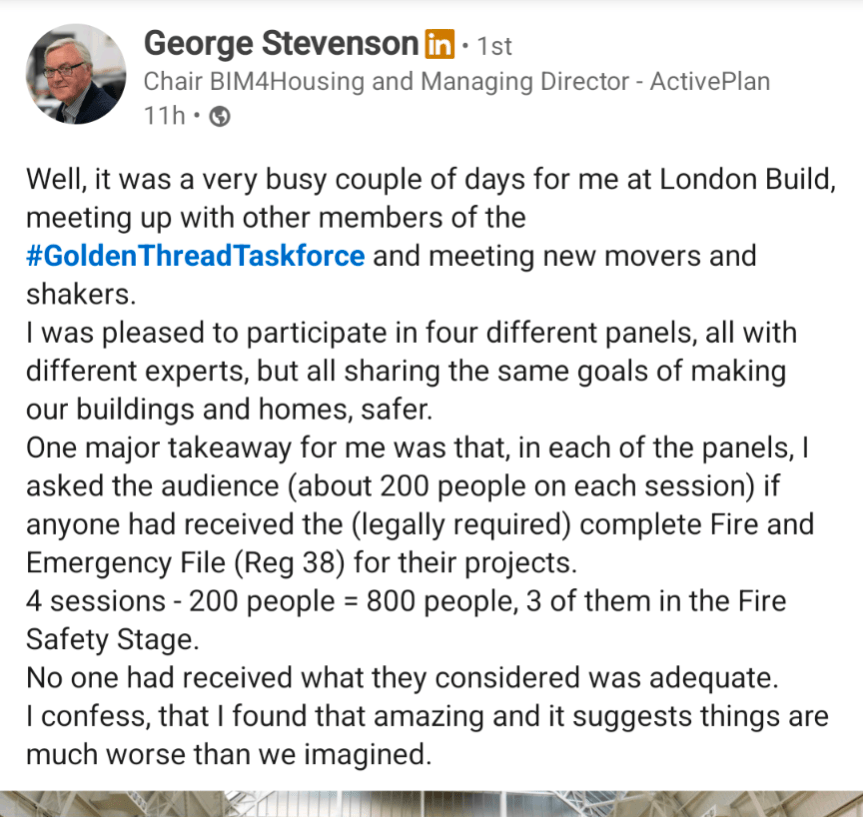 Continue reading →: Regulation 38, the Golden Thread… and Why COBie Is the Solution Hiding in Plain Sight
Over the weekend I came across a LinkedIn post that genuinely stopped me in my tracks. The speaker had taken part in multiple panels at London Build, all focused on the Golden Thread, fire safety, and the realities of delivering compliant information. Across four panels, with roughly 200 people in…
-
Continue reading →: Trialling Microsoft Copilot Premium as a BIM Manager
As a BIM Manager working in an architect’s office, I recently trialled Microsoft Copilot Premium to see how it could support BIM Information Management. Like most tools, my experience has been a mix of good and bad—but here are my honest thoughts. First Impressions Copilot is deeply integrated into Microsoft’s ecosystem, which…
-
 Continue reading →: COBieOM: The Most Underrated Handover Solution Nobody Talks About
In my last blog post, I briefly mentioned COBieOM, and the more I think about it, the more I realise just how overlooked this tool really is. In a world obsessed with glossy digital twins, immersive dashboards and fully model-driven facilities management, COBieOM is almost the complete opposite: simple, practical,…
-
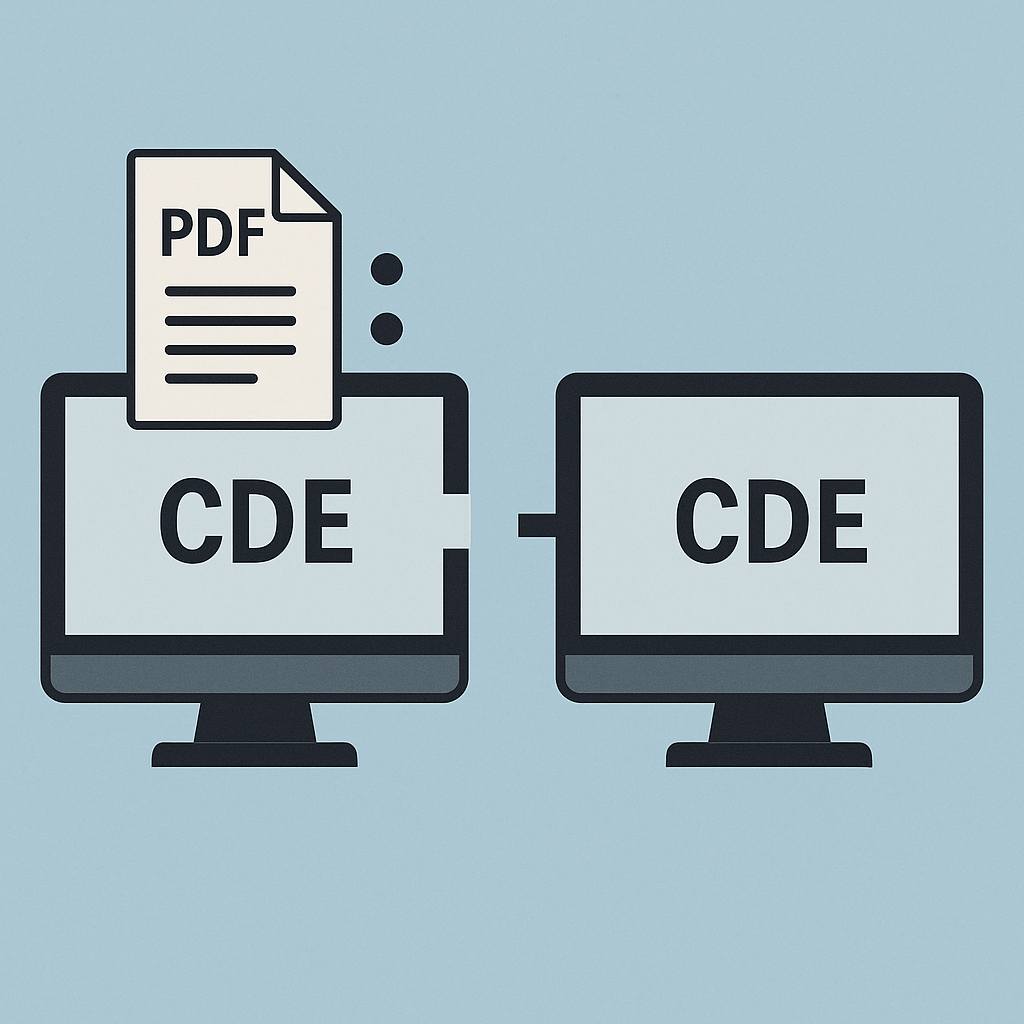 Continue reading →: The CDE Problem No One Wants to Talk About: Why “Open” Isn’t Really Open
The term “Common Data Environment” gets repeated endlessly in digital construction. We talk about single sources of truth, ISO 19650 compliance, OpenBIM, structured data delivery, and lifecycle information. CDEs are supposed to be the centrepiece of all of this — a reliable, neutral, interoperable information hub. But the reality is…
-
Continue reading →: ISO 16739, the New Compatibility Policy, and the Reality of IFC in Revit
The Industry Foundation Classes (IFC) standard has officially taken another step forward, with ISO publishing a new Compatibility Policy for ISO 16739-1, the international standard behind IFC. This policy aims to give the whole industry a clearer, more predictable roadmap for how IFC will evolve in future releases, how breaking…
-
Continue reading →: Using IFC Classes in a Responsibility Matrix
Over the last few weeks, I’ve been rebuilding our Responsibility Matrix to align more closely with IFC 4.3 and the way deliverables are structured in ISO 19650 projects. Rather than just listing deliverables under Uniclass 2015 System (Ss) codes — such as “Architectural,” “Structural,” or “Mechanical” systems — I’ve started…
Hello,
I’m William
But feel free to call me Willy. I qualified with a BSc (Hons) in Architectural Technology and worked as an Architectural Technologist for over 15 years before moving into BIM Information Management. Since 2015, I’ve been working with BIM and digital construction workflows, and in 2023 I stepped into my current role as a BIM Information Manager. I am also BRE ISO 19650-2 certified, reflecting my commitment to best-practice information management. On this blog, I share insights on BIM and Information Management, along with personal reflections on investing and balancing professional life with family.
Husband | Dad | Dog Owner | Curious Mind
Recent posts



Advice & Information on this website:
The content on this blog is for informational and entertainment purposes only. It is not financial advice. The opinions expressed here are solely my own and do not constitute official financial recommendations.

